
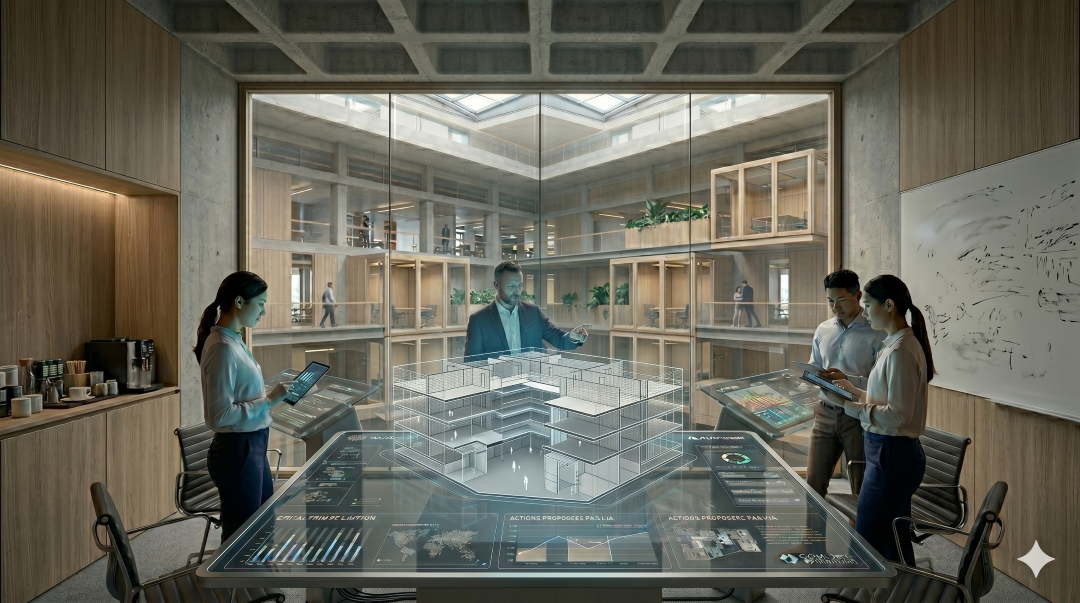
The digital twin appears as a relevant solution to optimize the use of work spaces. By mirroring the physical building inside a continuously updated digital model, it lets real-estate and workplace teams test hypotheses, observe outcomes and steer decisions in a way that paper plans never could.
What a digital twin actually is
Strip away the marketing layers and a workplace digital twin is three things wired together:
- A geometry model of the building — typically derived from BIM, kept alive over time.
- A live data feed — sensors, badges, booking systems, ticketing.
- A behavioral model — how teams move, collaborate and use spaces.
The combination is what makes the twin useful: geometry alone is a CAD file, data alone is a dashboard, behavior alone is sociology. Together, they enable simulation.
Where it pays off
- Pre-deployment: simulate a layout change before committing to it
- Operations: catch under-used or over-stretched zones early
- Strategic: test "stay or move" scenarios with credible numbers
Where teams get stuck
Most digital-twin programs fail not on technology but on maintenance: the twin drifts from reality the moment somebody renovates a floor without updating the model. The successful programs treat the twin as a product with an owner, not a one-shot deliverable.
What this enables
When the twin is alive, augmented intelligence can sit on top of it and generate scenarios at scale. The twin becomes the substrate on which decisions get tested — and that's where the real value compounds.